
We express couriers are losing our jobs because delivery platforms are outsourcing to subcontractors that encourage criminal activity. How to stop this? We need to ban bogus subcontracting!
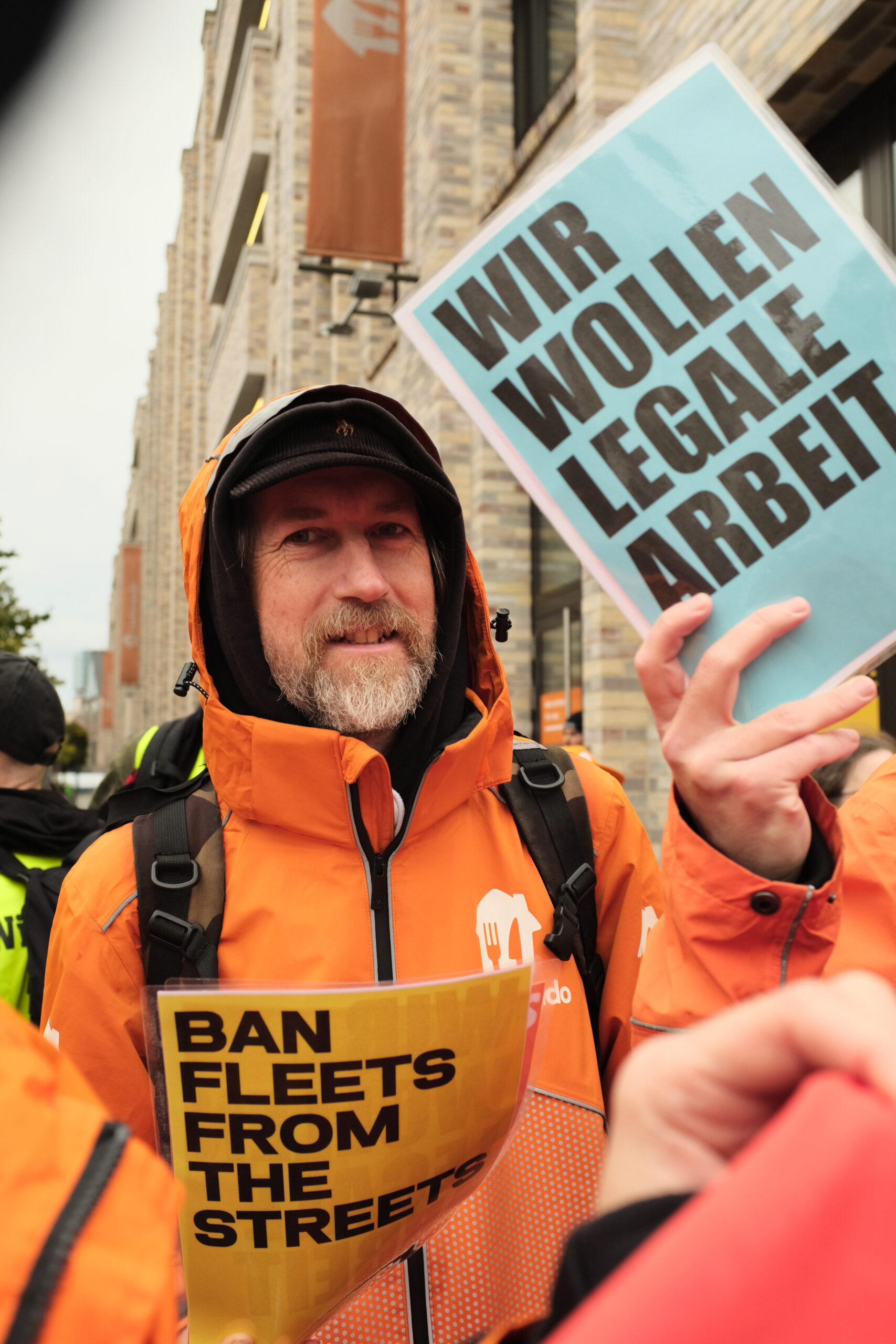
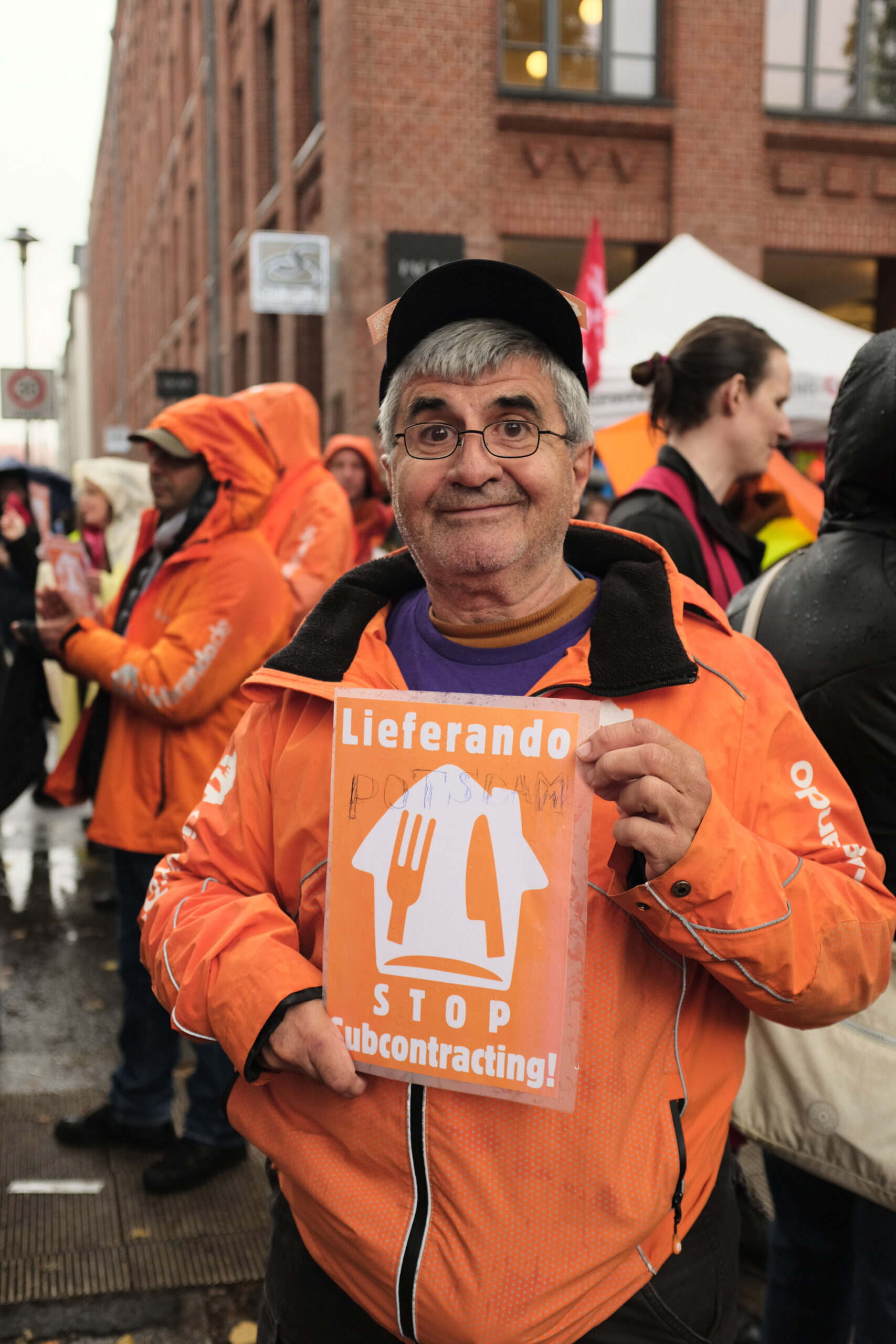
The Lieferando Workers Collectives petition for direct employment of us express couriers at delivery platforms like Lieferando, Wolt, UberEats & Co.
The federal government (CDU, CSU & SPD) does not want to force delivery platforms to stop outsourcing to criminal scam subcontractors!
We need your help to change this!
Fake criminal subcontractors must be banned!
Just as it has already proven successful in the meat industry!
We need your help to change this!
What’s next?
What do we petition for?
Ensuring the same level of protection as for direct employment and strict joint and several liability without the possibility of exculpation (Article 3 PWD).
Regular, standardized audits of delivery services’ working conditions, data protection, and consumer protection standards. Protection of customers and couriers through the publication of audit results using a traffic-light rating system. Similar to the Fairwork ratings.
DIRECT
EMPLOYMENT
NOW!
Why this petition?
Lieferando, Wolt, and Uber Eats do not directly employ their couriers—they outsource them to “fleet partners.” Uber Eats has not directly hired a single courier since entering the market. Wolt has hardly any directly employed couriers left. Lieferando has been cutting at least 2,000 direct positions since early 2025 and is cutting more in 2026.
Despite outsourcing to bogus subcontractors, platforms keep full operational control. Platforms define when work needs to be done. They set the delivery routes. They monitor performance in real time. Work is tightly controlled by the platform while the legal responsibility is pushed to bogus subcontractors and the and economic risk is pushed to the workers.
Platforms control the work. But they avoid employer obligations. When authorities investigate, then bogus subcontractors vanish. This is organised negligence.
Only a ban on subcontracting would stop the negligence. Direct employment would place responsibility with the companies that control the work.
The Lieferando Workers Collective (LWC) Berlin describes subcontractors as a “crime-inducing environment” or mafia-like:
The bogus subcontractors often call themselves “fleet managers”. They are mostly just WhatsApp contacts. There is no clear legal entity. Couriers do not know who is responsible.
Some couriers pay up to €500 for contracts. Others must “rent” their contracts. Fleet managers make threats and are violent when workers raise complaints.
The bogus subcontractors often pay out through middlemen in cash: no taxes, no social security payments. No minimum wage. No sick pay. No real protection.
Only a ban on subcontracting would remove these bogus subcontractors. Direct employment would make platforms directly responsible.
Food delivery requires hygiene and safe handling. The Food Hygiene Regulation (LMHV) and the EU Hygiene Regulations require cleaning and temperature monitoring of transport containers.
Often poorly isolated delivery bags are fixed on the bikes. Bikes are stored outside. The bags are rarely cleaned. This exposes food equipment to weather and pests (like rats). But when responsibility is fragmented, authorities have no clear point for an effective inspection.
Platforms outsource these employers’ obligations to bogus subcontractors and sub-subcontractors, who disappear or go bankrupt when problems arise.
Mo from LWC Berlin on hygiene: “The way we work is the way we deliver.” One problem, for example, is that he has to carry his change of clothes—sometimes dirty, worn-out clothes—in a bag with his food, without a separate compartment: “I wouldn’t eat the food I’m delivering myself, because I know what my backpack looks like.”
Only a ban on subcontracting would clarify responsibility. With direct employment one operator would be accountable for food safety and consumer complaint.
Bogus subcontractors offer no minimum wage, no minimum vacation time, no protection against dismissal, no sick pay, no workers council, and no collective bargaining agreements.
The Fairwork report on Germany (2025) gave UberEats and Wolt a score of 0 out of 10 stating that “the subcontractor model does not ensure fair labor standards.”
The LWC is not aware of a single subcontractor where minimum wage, minimum vacation time, continued pay during sick leave, or maternity protection is observed.
Only a ban on subcontracting would make the platform the legal employer. Direct employment would make workers rights enforceable.
Consumers and workers on delivery platforms have almost no control over how their data is collected and used. Platforms track workers and consumers continuously, even when they don’t use the platforms app.
For example, Lieferando’s “Scoober” app collects around 39 data points per delivery, including location updates every 15–20 seconds, which the Data Protection Commissioner of Baden-Württemberg called “clearly unlawful.” In Italy, the authorities fined Deliveroo €2.5 million for opaque algorithmic monitoring and frequent location tracking. The Dutch authority imposed a €290 million GDPR fine on Uber for unlawful transfer of sensitive driver data to the United States.
The risks extend to consumers. The Gorillas data leak in 2021 exposed over a million order records, including names, addresses, and photos of home entrances.
Only a ban on subcontracting would improve accountability for costumers and workers. Direct employment would remove bogus subcontractors that obscure who is liable for data protection failures.
Through fake subcontractors, platforms can shirk their responsibilities as employers. Subcontractors are often nothing more than figureheads, such as a man in Posen who was registered as a Wolt subcontractor without his knowledge.
At the same time, actual ‘bosses’ disappear behind WhatsApp numbers. If your boss is a WhatsApp number, then you have no rights.
Only a ban on subcontracting would fix this by making platforms directly responsible for workers. Direct employment would ensure that there is a real employer with a fixed address and identifiable decision-makers.
RBB investigative report by Fabian Grieger and Jan Wiese, December 2, 2025
Whole article: zeit.de
Source: tiktok.com
Source: tiktok.com
ArbeitGestalten: “That wages are withheld, that vacation time is withheld, that people are fired when they get sick—instead of saying, ‘This is an employee for whom I am also responsible.’”
Lawyer Martin Bechert: “Because delivery companies—or platform companies in general—are pulling out of the operational side of the business and leaving it, so to speak, to third-party companies, a criminogenic environment is developing where I think we need to step in, customs needs to step in, and the public prosecutor’s office needs to step in. I really do feel sorry for the people who are being forced into these working conditions.”
Source: instagram.com
DW report by Kate Ferguson, February 7, 2026
Why direct employment?
Caroline Dressel, professor of labor law at HTW Berlin, notes that the system is designed in such a way that customs and tax authorities can hardly “make sense of it”—responsibilities are deliberately obscured.
Dr. Johannes Specht: “There are no isolated incidents of misconduct in the industry; there are no individual bad apples; there are no potential violations.”
“Can’t we use milder measures to get the industry under control? No! No, we can’t! Because, for one thing, the federal and state governments’ oversight capabilities—also because staffing levels haven’t been properly increased yet—are not sufficient to monitor a company, to monitor a platform economy whose workplace is the entire city.”
Mark Baumeister, Head of the Hospitality Division at the NGG Union: “We have been fighting politically for a direct employment mandate for a long time.
Compared to other European countries, Germany has some of the worst conditions for workers in the delivery industry.
Slave-like conditions have been tolerated until now.
We expect Germany to enforce a direct employment requirement. Workers’ rights are human rights.”
Dr. Veit Groß from the Union NGG: “We are seeing serious and growing abuses: Above all, we see a structural problem, namely subcontracting chains that are so intertwined and fluid that effective oversight is impossible.”
“The German economic system has an immune system against exploitation, and this immune system consists of unions, works councils, and government regulatory agencies. The creation of highly complex subcontractor chains that are constantly changing serves to bypass this immune system, and it has no other purpose.“
”When, as a union, I no longer have a clearly identifiable employer to deal with. When responsibilities are fragmented between the platform and multiple subcontractors, then workers’ rights exist only in theory. Then, on paper, there may be a right to minimum wage, to continued pay in case of illness, to co-determination, but in reality there is no way to enforce it.“
”But here we are talking about more than just evading collective bargaining agreements. Here we are talking about the systematic undermining of legal minimum standards.”
Attorney Martin Bechert, who represents many couriers, describes delivery services as a “labor law laboratory” with a “crime-inducing environment”.
WZB researcher Patrick Feuerstein calls the shift from Lieferando to the subcontractor model an “absolute red flag”.
The third Fairwork report on Germany (2025) gave Uber Eats and Wolt a score of 0 out of 10:
“The subcontractor model does not ensure fair labor standards.”
“The proliferation of ‘shady subcontractors’ has led to ‘dramatic deteriorations’ compared to the first study from 2021, says Patrick Feuerstein of Fairwork. Employment contracts, accident insurance, and continued pay during sick leave are no longer a given. According to Feuerstein, Germany now ranks relatively poorly in terms of working conditions, even compared to India.”
The Hugo Sinzheimer Institute (HSI) has confirmed the constitutional and EU legal admissibility of mandatory direct employments in two expert opinions and has formulated a list of eight criteria:
“In any case, where these criteria are met, it is advisable to apply [the direct employment requirement] as well.”
“Direct Employment Instead of Exploitation”
A legal opinion from the Hugo Sinzheimer Institute (HSI) shows:
The requirement for direct employment, which combats precarious working conditions in the meat industry, can also be applied to other sectors such as parcel logistics.
It could be an effective means of breaking exploitative subcontracting chains and strengthening occupational safety for particularly vulnerable workers.
Last but not least, this would also allow for effective co-determination, which could in turn pave the way for collective bargaining agreements.
LWC couriers are pleading with the federal and state governments:
Put an end to this inhumane suffering! Protect us delivery workers and consumers!
WhatsApp numbers can NOT be employers!
Ban bogus subcontracting! End the organized negligence! Direct employment NOW!
Couriers and their representatives have repeatedly drawn public attention to this institutional failure across the entire sector, most recently at the hearing of the Committee on Labor and Social Affairs of the Berlin House of Representatives (Abgeordnetenhaus) on March 5, 2026
Who supports?
“Some of what goes on there is organized crime. We don’t even know which companies are involved—and that’s the problem with enforcement. Companies come and go. It’s almost impossible to enforce regulations there.“
“When those affected try to sue for their earnings or wages, the company disappears—and with it, any real possibility of even partially recovering what is owed.“
“When many people are promised a good job, but in reality they experience something completely different — namely, that they end up without health insurance, without social security, without occupational safety protections, and instead of fair pay, they often recaeive only a pittance — as we have heard, often not even that — then that is a dangerous trend. We must and will take action.”
Federal Labor Minister Bärbel Bas plans to have a ban on subcontracting for food delivery services reviewed. Her aim is to take more effective action against the numerous violations of labor law committed by subcontractors of delivery services. According to Bas, this is “the only way to bring about greater transparency and provide security for the workers themselves.”
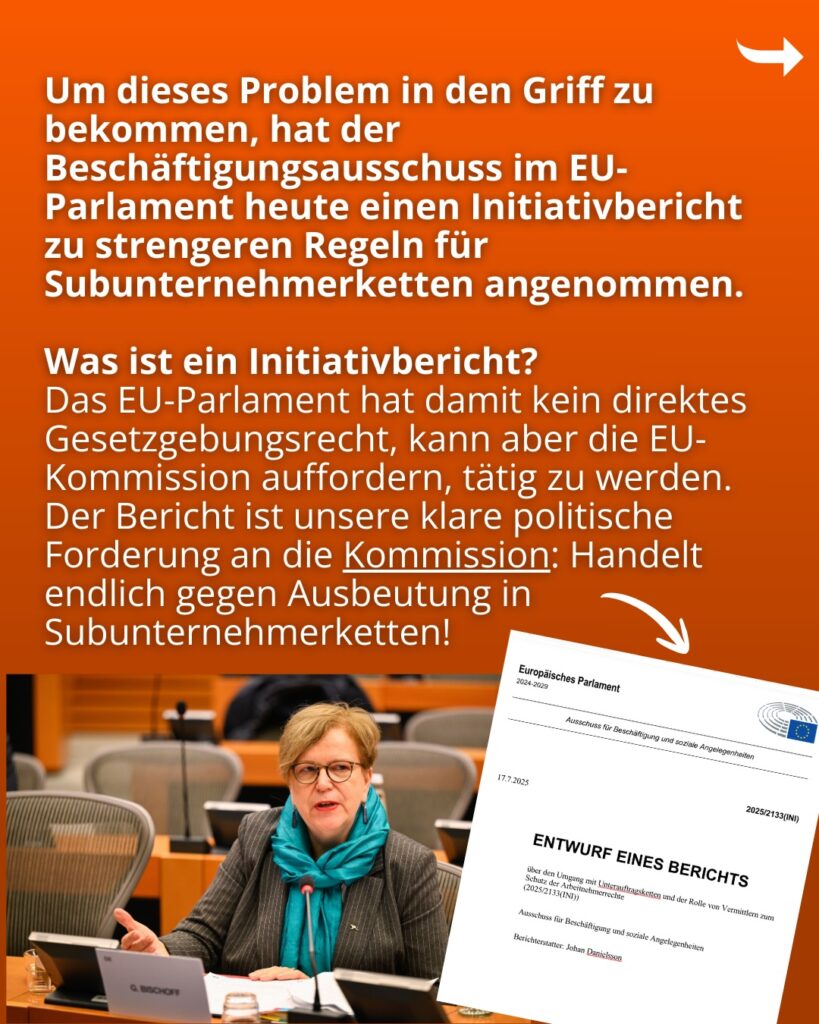
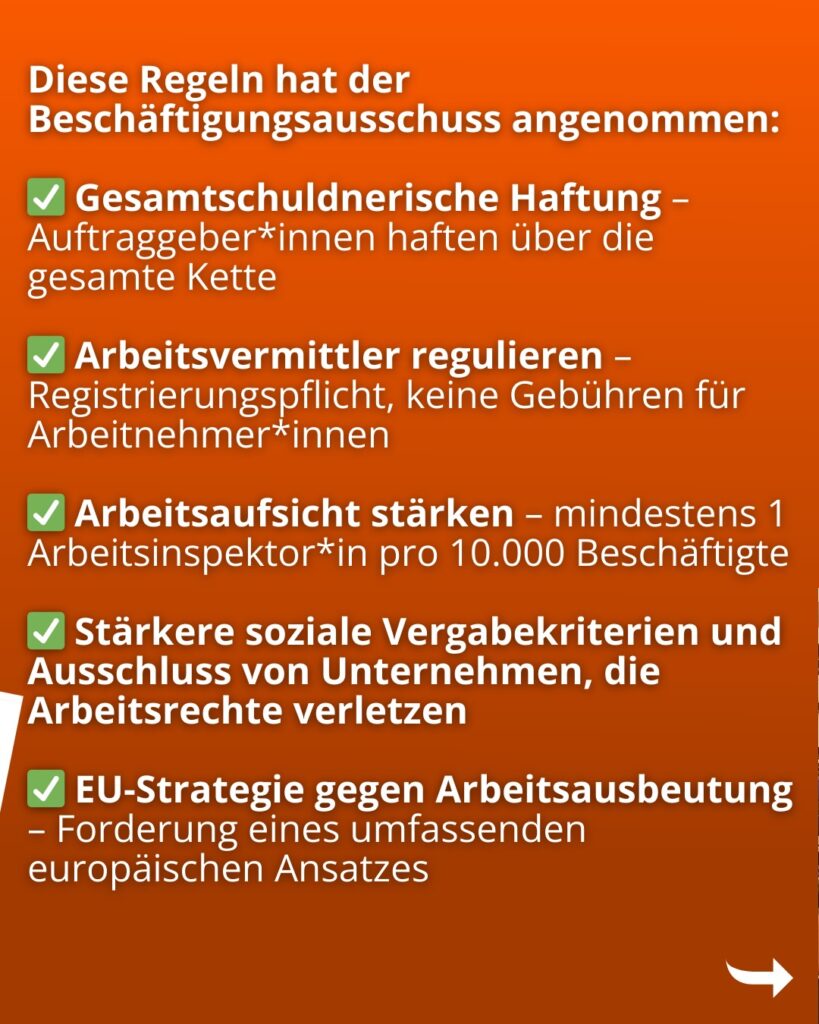
“For a model to survive in the market over the long term, there need to be comparable employment models across the industry,” a company spokesperson replied in response to a query from NDR. “This is not the case in Germany.”
And that is what bothers Bremer. Regular employment relationships are therefore increasingly being replaced by arrangements involving subcontractors, short-term or verbal contracts, and de facto dependencies without adequate legal protection. Communication with employees sometimes takes place exclusively through informal channels such as WhatsApp. Reliable working time regulations, transparent scheduling, effective occupational safety, as well as employee participation and union organization are thus systematically hindered or effectively ruled out.
This development runs counter to the Christian Democratic understanding of the social market economy, in which economic success and social responsibility are inextricably linked
He stated that the guiding principle of his policy is that competition among companies should not come at the expense of workers—that is, “not by driving down wages”—and that “a company’s core tasks should be performed by people who are permanently employed there.”
In the case of food delivery services as well, it was clearly the delivery drivers—many of whom were employed by subcontractors—who carried out the company’s core function: delivering the food.
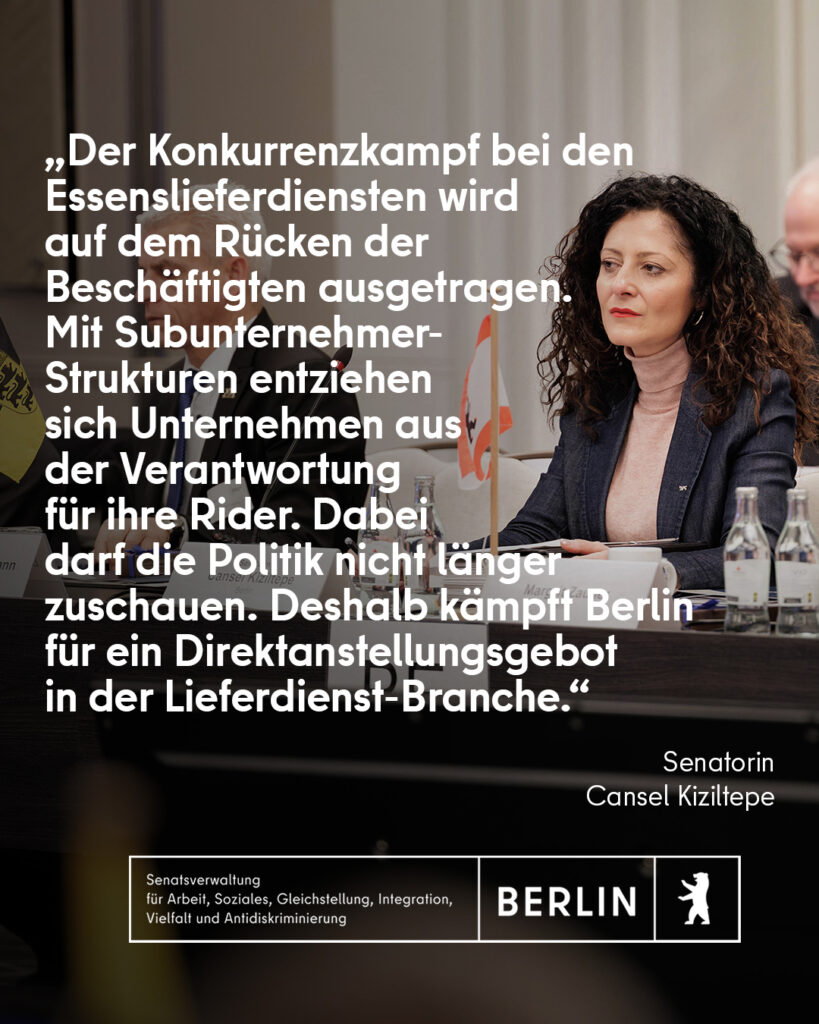
Conference of Ministers of Labor and Social Affairs (ASMK), initiated by Cansel Kiziltepe (SPD)
- The state ministers and senators responsible for labor and social affairs note that working conditions in platform work, particularly in food delivery services, are often characterized by fixed-term contracts, low pay, and a heavy reliance on digital platforms.
- They note with concern that food delivery services are increasingly relying on complex subcontracting structures, which makes it significantly more difficult to ensure fair working conditions.
- In this context, the ministers and senators for labor and social affairs of the federal states are particularly concerned about workers, many of whom come from abroad. The federal states therefore see a need to improve working conditions across the board in this labor market and to ensure binding minimum standards.
- The state ministers and senators for labor and social affairs are therefore calling on the federal government to enshrine in law a requirement for direct employment of platform workers in the food delivery sector.
- The state ministers and senators responsible for labor and social affairs request, as an alternative, that consideration be given to extending the provisions of the Parcel Delivery Protection Act to food delivery services.
“This modern-day exploitation, right here among us, must come to an end”
“Workers who unionize at delivery services or speak out about working conditions are pressured or replaced by cheaper day laborers.”
Source: instagram.com
Source: instagram.com
The EU Platform Directive must finally be consistently implemented, and workers must be protected.”
Source: instagram.com
“The pizza tastes good—the working conditions don’t 🤢 We made it happen: a small step against the exploitation of riders at Lieferando and similar companies, thanks to the pressure we applied. But the government isn’t implementing real policies for riders. We must finally protect delivery service workers, implement the EU Platform Directive, develop national action plans against exploitation and human trafficking, and truly combat illegal employment.”
Source: instagram.com
The EU Platform Directive must finally be consistently implemented, and workers must be protected.”
Source: instagram.com
“Together with our parliamentary group, Die Linke, I have submitted a motion to the House of Representatives calling for the swift and strict implementation of the Square Form Directive.“
“The direct employment requirement must be implemented. Platforms must directly hire the people who work for them and must not outsource them to shady and legally questionable subcontractors.”
“The major platforms must be held liable for their subcontractors.“
“Implement the EU Platform Directive and introduce a requirement for direct employment.”
On Tuesday afternoon, the Left Party, led by its top candidate Elif Eralp, presented its proposal in front of the Rotes Rathaus to have the city certify platform companies in the future. “LieFair Berlin,” a seal of approval for fair delivery work, is intended to provide guidance to customers and thereby help ensure better working conditions for the up to 15,000 Berlin employees of delivery platforms. Data will be collected every two years for this purpose, and the seal will be awarded accordingly. Companies that do not meet the requirements will also be publicly named. Eralp demands: “These exploitative conditions must finally come to an end.”
A major problem for workers in the industry is the outsourcing of their work to subcontractors, sometimes under completely unregulated conditions, without contracts or insurance, and with cash payments calculated per delivery.
Quelle: instagram.com
Source: youtube.com
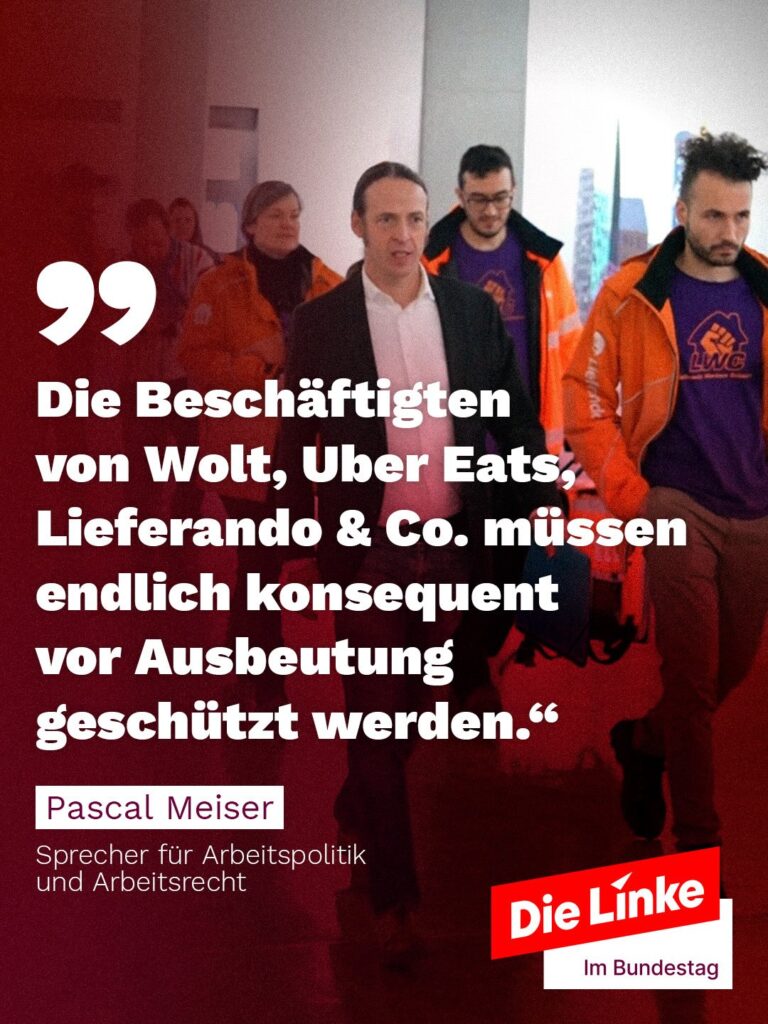
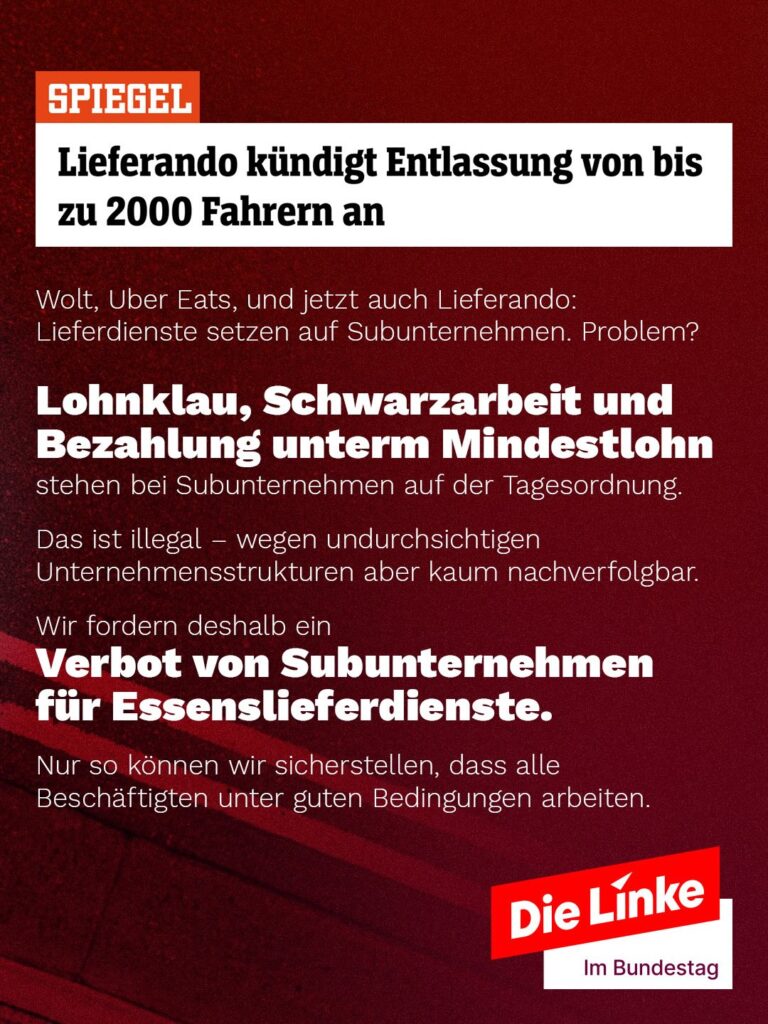
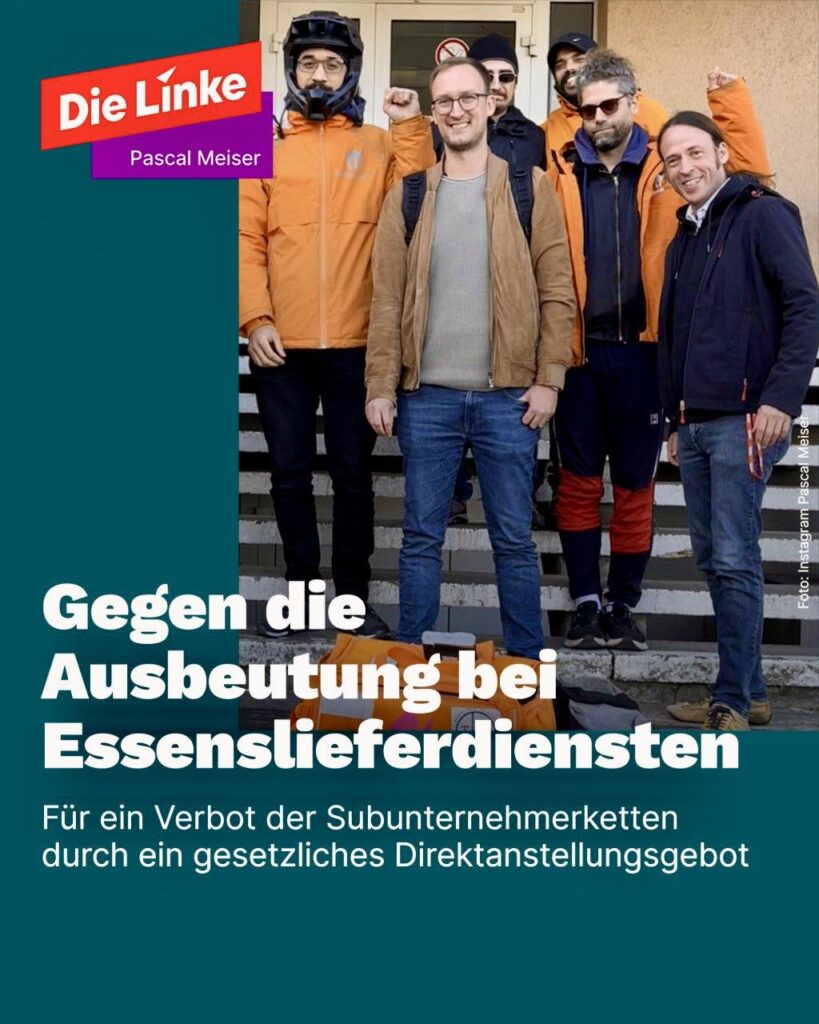
“‘It is you who keep the city running,’ Koçak, the Neukölln member of the Bundestag, assures the couriers. Instead of showing them respect and apapreciation, their bosses are only interested in exploiting them: ‘If your boss cheats you out of your pay, it’s no accident,’ Koçak is convinced.”
Source: tiktok.com

Who is the LWC?
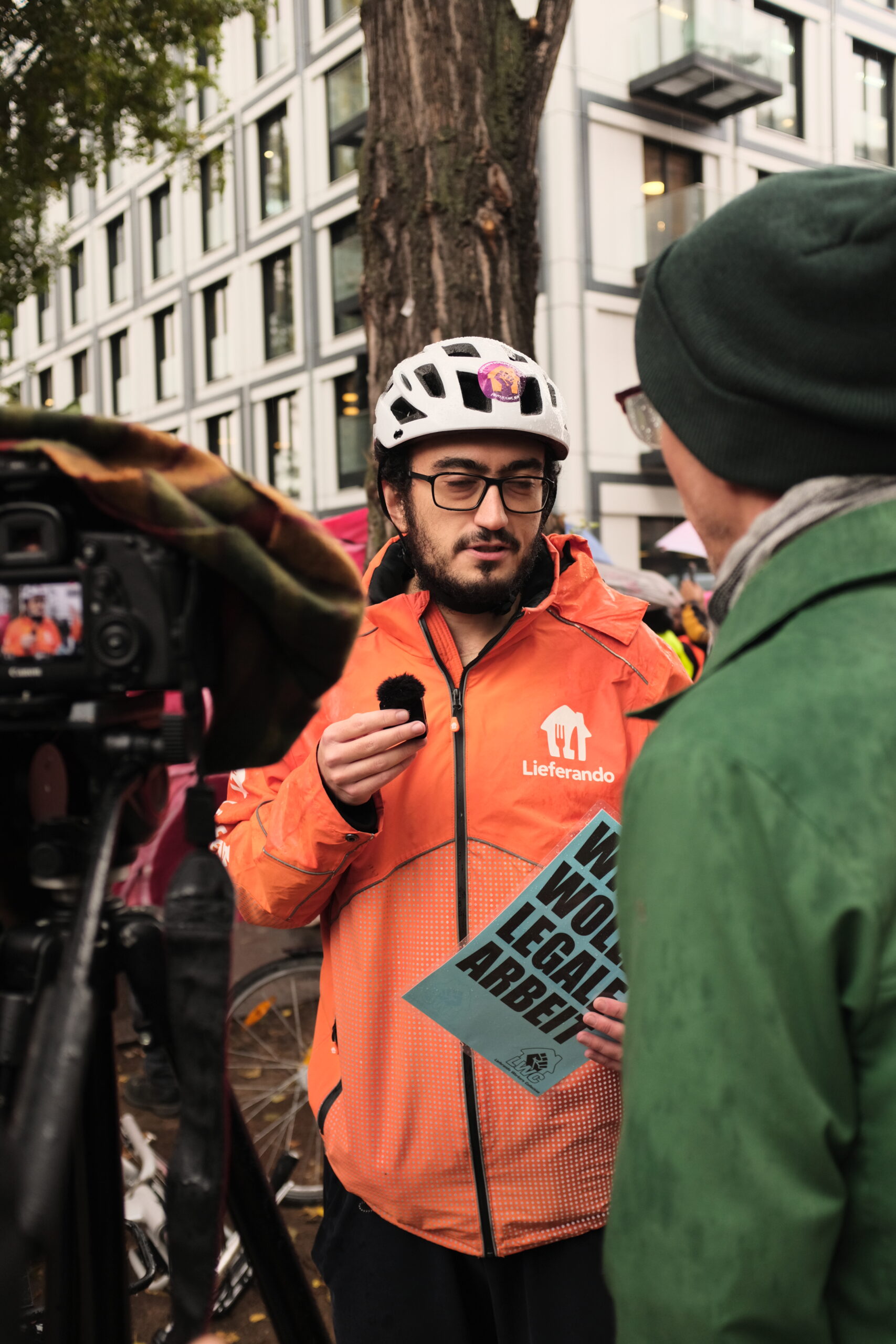
The Lieferando Workers Collective (LWC) is the largest self-organized group representing couriers—most of whom are migrants—in Germany. At Lieferando Berlin, we represent 1,500 couriers, as well as many working for Wolt, UberEats, and an increasing number of FAKE subcontractors. Lieferando accounts for 80% of the German food delivery app market. The LWC represents approximately 30% of the couriers at Lieferando. Lieferando does not deliver over 90% of its orders itself. We estimate that soon every second Lieferando order in Germany handled by Lieferando’s own logistics will be delivered by a courier who is directly or indirectly supported or represented by the LWC. You order, we deliver!



LIEFERANDO WORKERS
COLLECTIVE POWER!
UnionBusting Strategy: Outsourcing to FAKE subcontractors during Workers Council Elections, March 25, 2025
Protest against Wolt wage theft, LWC Berlin at April 5, 2023
Source: instagram.com